Ethylene and food storage
Ethylene is a natural plant hormone that triggers ripening. Many fruits release it; many vegetables (and some fruits) are sensitive to it and will soften, change color, or spoil faster when exposed.
Producers — Apples, bananas, avocados, tomatoes, and stone fruits are common ethylene producers. Storing them in a bowl on the counter is fine if you want them to ripen, but they can speed up spoilage of nearby produce.
Sensitive items — Leafy greens, carrots, broccoli, cucumbers, and potatoes are ethylene-sensitive. Keep them away from producers, or use ventilation so the gas doesn’t build up.
Ethylene absorbing products
Absorbers (pouches, sheets, or pods) pull ethylene out of the air so it doesn’t build up in a drawer or container. Helpful when you can’t separate producers from sensitive items or when you want to slow ripening in a mixed bowl.
Our favourite ethylene absorber is the Fridge Friend. It’s nicely designed and it lasts 3 years without any additional filters or packets. Do yourself a favour and buy one (or three) for your fridge.
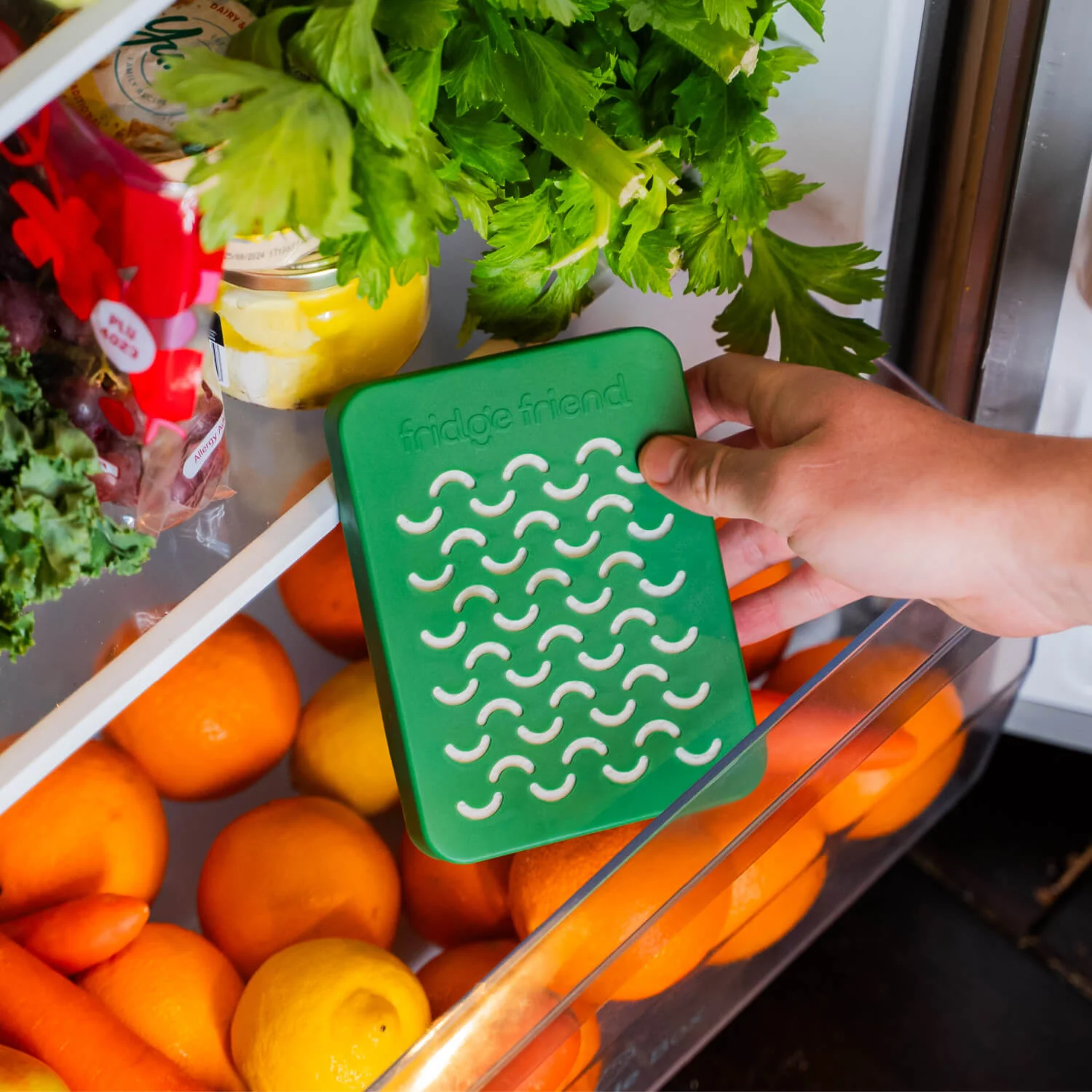
Fridge Friend
Keeps produce fresh up to 3 weeks longer — naturally.
- 79%ethylene absorbed
- 3 yrslasts with monthly refresh
- 4.7★900+ reviews
More products
Using it on purpose — You can ripen firm avocados or peaches by putting them in a paper bag with a banana. The trapped ethylene speeds things up. Once ripe, move producers away from sensitive items or into the fridge if appropriate.
Good airflow is another way to keep ethylene from concentrating. Open baskets and breathable mesh bags let the gas disperse instead of trapping it around the produce.
Ventilated containers and baskets
On individual food pages we note whether an item produces ethylene, is sensitive to it, or both. A little separation or airflow usually fixes issues.